
Policy to Practice: Providing Meaningful Direction to an Organization
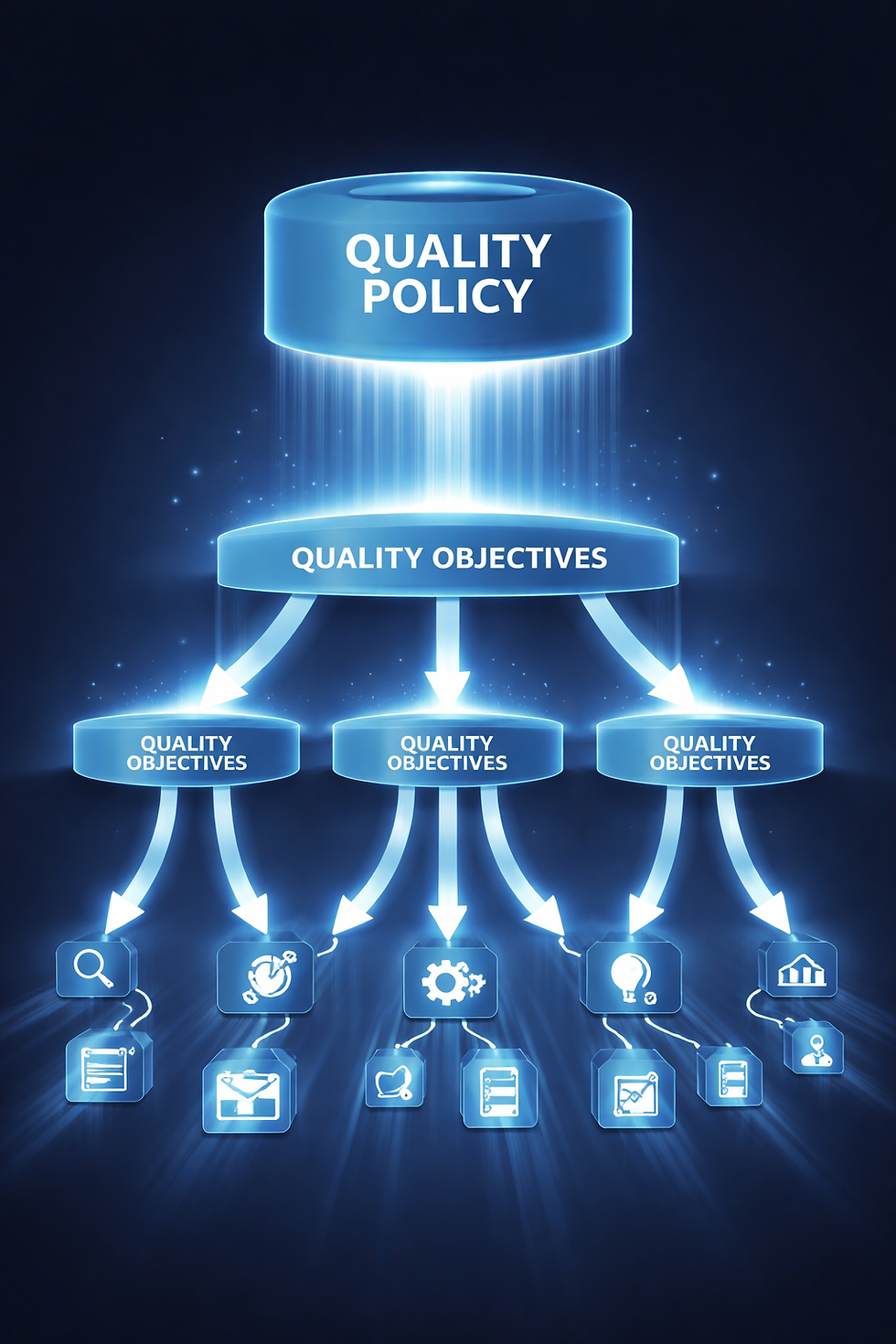
Every quality management system begins with a Quality Policy. It is usually one of the first documents auditors ask to see, and for many organizations it becomes a statement that hangs in conference rooms or gets recited during onboarding. However, behind the formality is a deeper purpose. The Quality Policy is more than a required document; it is the organization’s declaration of intent. It establishes why the company exists in the context of quality and what it is fundamentally committed to achieving for its customers, regulators, and patients. This policy becomes the first link in a chain that runs through the entire quality management system. The central question for this post is how a simple statement of intent transforms into specific, measurable actions that shape everyday work and, ultimately, the quality of the medical devices an organization produces.
Setting the Quality Policy
The Quality Policy is meant to achieve one critical goal: aligning the organization’s overall mission with its responsibility to deliver safe, effective, and compliant products. A good Quality Policy should be concise, actionable, and aligned with regulatory intent. It should set direction and reflect commitment, not just state an aspiration.
Creation of the quality policy is the responsibility of senior management and it should not be delegated. Following its creation, it must be communicated and understood throughout the organization. These are the basic requirements of a quality policy and a lot of times it gets left at that.
Communication is often done via posters posted on the walls throughout the facility. Understanding, if we are being honest, is often not achieved. There is a requirement in clause 6.2 of ISO 13485:2016 that “personnel are aware of the relevance and importance of their activities and how they contribute to the achievement of quality objectives.” Since quality objectives should stem directly from the quality policy, this requirement is not really met if the quality policy is not effectively communicated and understood. For this reason, rather than senior management creating the policy in isolation and posting it for everyone else to see, it is best for all levels of management to meet and discuss the direction the company wants, and is realistically capable of taking with regard to quality.
Turning Policy Into Action
The overwhelming majority of quality policies read something like “[company] commits to the timely delivery of high quality, compliant devices…something about continuous improvement.” As generic as that statement is, there is also a lot to unpack for the lower echelons of the organization. As an organization we have committed to 1) timely delivery, 2) high quality devices 3) compliant devices (obviously this must be in every policy) and 4) continuous improvement. The translation of these commitments into objectives that provide meaningful indicators to the business is an art of quality management. As with most planning activities, it usually works best to work backwards from the goal.
The first step is to clearly define what those commitments are. What is “timely delivery?” On what scale does this deviate? Are you expected to deliver devices on several months lead time, so perhaps a week or two deviation is acceptable? Or must you fulfill orders within hours so an hour delay could be critical? From there, you can set targets for your final packaging and shipping processes, time to pack and ship, number of packages shipped a day (though be careful with objectives that are just quotas, they can cause a focus on volume over quality). Continuing to work backwards with a focus on how each process in the chain affects timely delivery until you reach your receiving process, then develop your supplier controls regarding timeliness of their deliveries to you in a manner that allows you to meet your own objectives.
With all of that, you have now taken two words from the quality policy and projected them into real objectives for all employees that can affect that commitment. You have truly communicated the policy and ensured understanding by relating it to the actual processes the personnel work. The next step is to rinse and repeat for each commitment the quality policy sets until your entire policy is acted upon by every part of the organization.
Conclusion
Setting a quality policy and quality objectives are a regulatory requirement for medical device manufacturers. However, treating them as checkbox activities to show an auditor is like watering down your concrete for the foundation of a new building, with an inadequate foundation, the system will collapse eventually. A good quality policy leads directly to clear objectives that every employee in the organization can follow and know they are meeting customer needs. When customer needs are not met, good policy and objectives immediately tell you where the problem occurred so that remediation can take place in a timely manner.


Comments